



Research Sharing: Bile Acids Solving the Core Challenges of Giant River Prawn Farming
The team led by Professor Liu Li from South China Agricultural University—a Doctoral Supervisor who leads National Key R&D Programs and has published over 30 SCI papers—conducted a systematic study on the Giant River Prawn (Macrobrachium rosenbergii). Their research focuses on the mechanisms of bile acids (BA) regarding growth, lipid metabolism, and hepatopancreas health, providing an authoritative scientific basis for the industrial upgrading of the prawn industry.
1. Core Experimental Data (60-Day Trial)
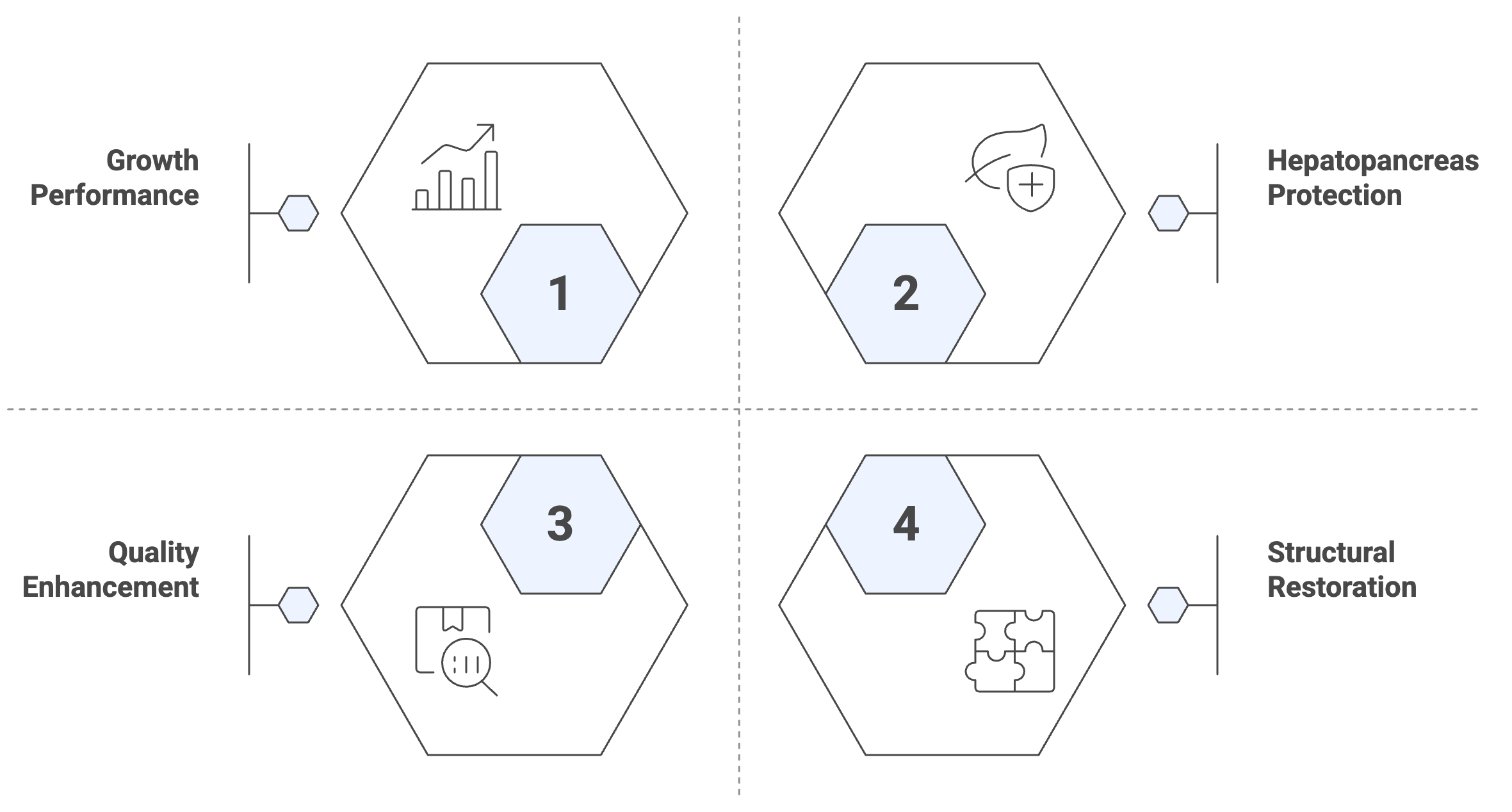
01. Growth Performance: In the 0.1% bile acid group, the body weight, Specific Growth Rate (SGR), Weight Gain Rate (WGR), and survival rate at 30 days increased by +3.3%, +8.3%, +10.7%, and +2.1%, respectively, compared to the control group.
02. Hepatopancreas Protection: In the 0.1% group, levels of ALT, AST, and LDH decreased by -24.8%, -23.9%, and -47.4%, respectively. In the 0.05% group, ALP and GGT decreased by -11.7% and -55.5%, while blood lipids (cholesterol and triglycerides) were significantly reduced.
03. Quality Enhancement: Muscle moisture, crude fat, and crude ash content decreased, while crude protein significantly increased (0.025%/0.05% groups, P < 0.05).
04. Structural Restoration: Lipid droplets in the hepatopancreas were reduced and regularly arranged, with intact endoplasmic reticulum and mitochondrial structures. This indicates a significant improvement in fatty liver conditions and liver damage.
2. Industry Contribution And Status
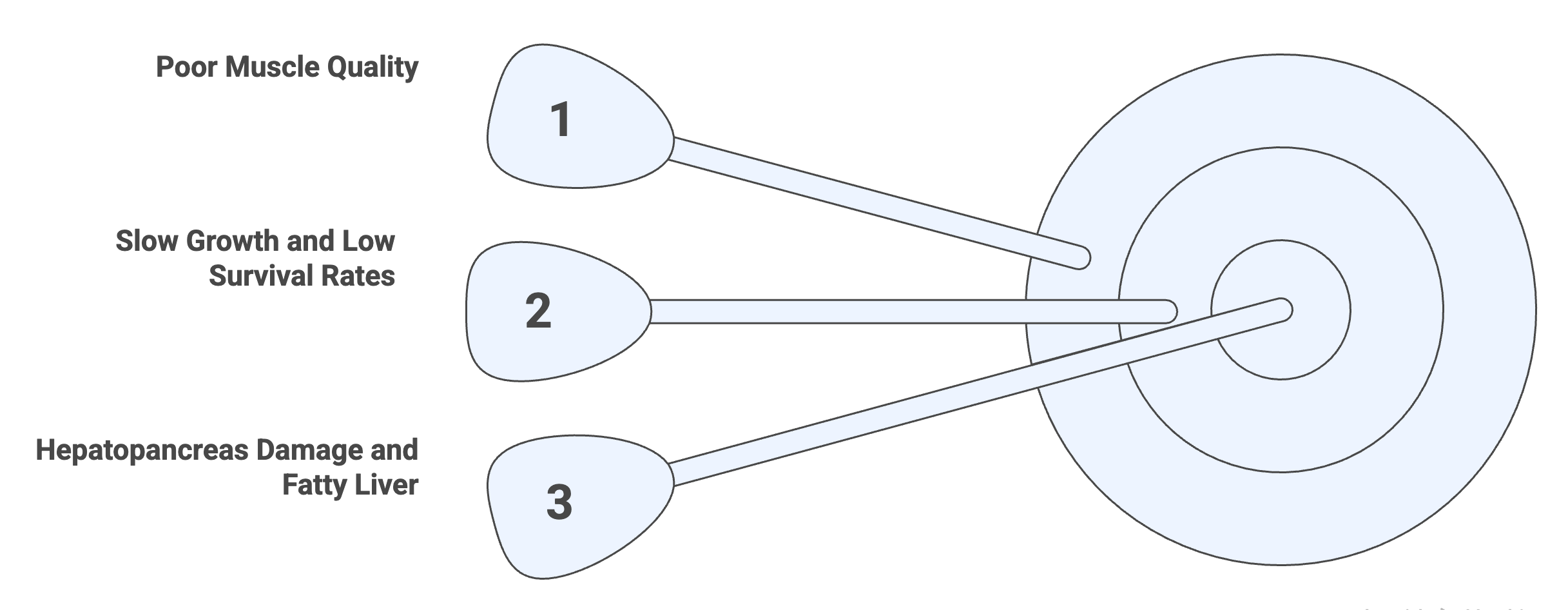
Solving Three Major Pain Points: ① High incidence of hepatopancreas damage and fatty liver; ② Slow growth and low survival rates; ③ Poor muscle quality and unstable economic benefits.
Filling Research Gaps: This study is the first to systematically reveal the molecular mechanisms of bile acids in lipid metabolism regulation, hepatoprotection, and quality enhancement for Macrobrachium rosenbergii, providing core technical support for intensive, healthy aquaculture.
3. Leading Industrial Upgrading
These research findings have become an authoritative reference for Giant River Prawn feed formulation and disease prevention. By promoting the implementation of the "Hepatopancreas & Intestine Protection + Nutritional Regulation" model, this work helps the industry overcome challenges related to germplasm and disease, achieving stable yields, improved quality, and efficient, sustainable development.
Special Note: This article is intended for objective review of research progress and academic discussion. The content is sourced from published scientific literature and does not serve as product promotion or usage recommendations.
References:
Ma Junxia, Zhang Shengpeng, Li Zhuojian, et al. Effects of bile acid preparations on lipid metabolism of Macrobrachium rosenbergii [C] // Shi Fangxiong. Proceedings of the 10th National Animal Physiology and Biochemistry Academic Exchange Meeting. Yangling: Animal Physiology and Biochemistry Branch of China Association of Animal Science and Veterinary Medicine, 2008: 117-118.