



The Role of Bile Acids in High-plant-protein Shrimp Feed
Plant-based protein sources (such as soybean meal, rapeseed meal, and cottonseed meal) are widely used in shrimp feed as substitutes for fishmeal. However, their inherent nutritional and physiological limitations pose significant challenges for shrimp, particularly for species with demanding nutritional requirements like Litopenaeus vannamei. High-plant-protein diets are prone to issues such as interference from anti-nutritional factors, amino acid imbalances, cholesterol deficiency, and increased metabolic burden on the hepatopancreas, ultimately leading to growth inhibition and health risks. Against this backdrop, the exogenous addition of bile acids has evolved from an optional approach to a key technical measure, with its necessity grounded in four core aspects of fully substantiated rationale:
PART.1 Compensating for the inherent sterol nutritional and physiological deficiencies in crustaceans
Crustaceans such as shrimp have an extremely limited capacity for endogenous cholesterol synthesis and lack the key enzyme systems required to convert cholesterol into conjugated bile acids. Plant-based raw materials provide almost no cholesterol and are deficient in taurine, which is essential for synthesizing conjugated bile acids. Consequently, shrimp fed plant-based diets face a dual deficiency of both "raw materials" and "synthetic capacity," resulting in severely insufficient endogenous bile acid secretion. This directly impairs their ability to emulsify and digest lipids. Therefore, the exogenous addition of bile acids serves as a fundamental compensation for the basic digestive physiological deficiencies in shrimp and is a prerequisite for maintaining normal fat metabolism.
PART.2 Effectively mitigating the negative effects of anti-nutritional factors
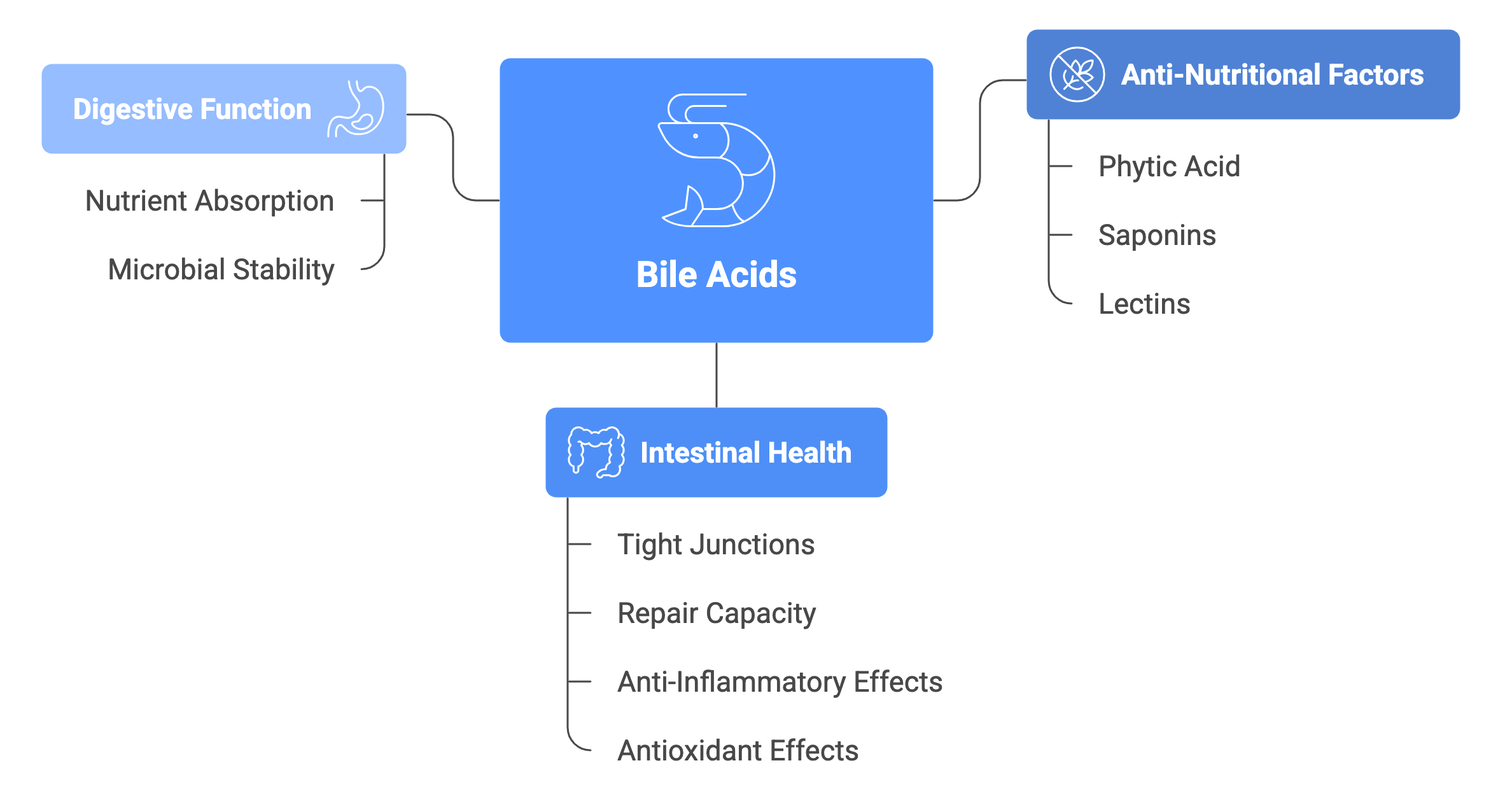
Anti-nutritional factors in plant-based raw materials, such as phytic acid, saponins, and lectins, can damage the intestinal mucosal barrier, induce inflammation, and interfere with nutrient absorption. Studies indicate that bile acids not only enhance the tight junctions and repair capacity of intestinal epithelial cells but also possess certain anti-inflammatory and antioxidant effects, thereby protecting the structural integrity of the hepatopancreas and intestines. By alleviating tissue damage caused by anti-nutritional factors, bile acids help maintain normal digestive and absorptive functions as well as intestinal microbial stability, providing a healthy physiological environment for nutrient utilization.
PART.3 Significantly improving lipid and energy utilization efficiency
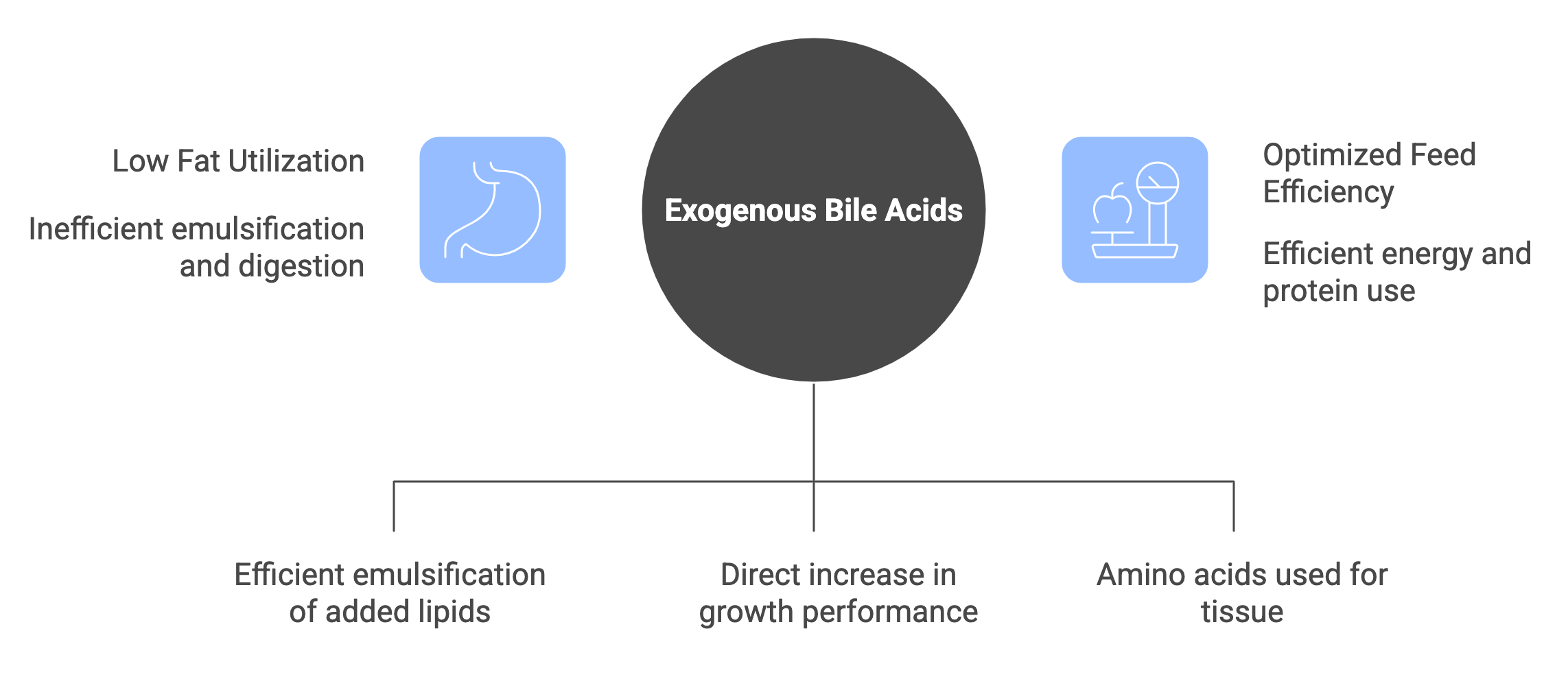
To compensate for the lower energy density of plant-based proteins, low-fishmeal diets typically require increased fat supplementation. However, without adequate bile acid involvement, the added lipids cannot be effectively emulsified and digested, leading to low fat utilization, reduced growth performance, and water quality pollution. As highly efficient biological emulsifiers, exogenous bile acids can significantly enhance fat digestibility, ensuring efficient energy utilization. This not only directly promotes growth but also achieves a "protein-sparing effect"—allowing more amino acids to be used for tissue construction rather than energy supply—thereby optimizing overall feed efficiency.
PART.4 Systematically maintaining hepatopancreatic health and enhancing physiological tolerance and disease resistance
Long-term consumption of high-plant-protein diets tends to overload the hepatopancreas of shrimp, leading to fat infiltration, oxidative stress, and functional damage, which are key causes of growth retardation and weakened immunity. Bile acids effectively reduce hepatopancreatic fat deposition and oxidative damage by promoting lipid metabolism, regulating cholesterol homeostasis, and enhancing antioxidant defenses. A healthy hepatopancreas serves as the metabolic and immune center for shrimp, and its functional maintenance directly enhances the shrimp's physiological tolerance to non-ideal diets, reduces the risk of metabolic diseases (such as hepatopancreatic necrosis), and ensures stability throughout the farming process.
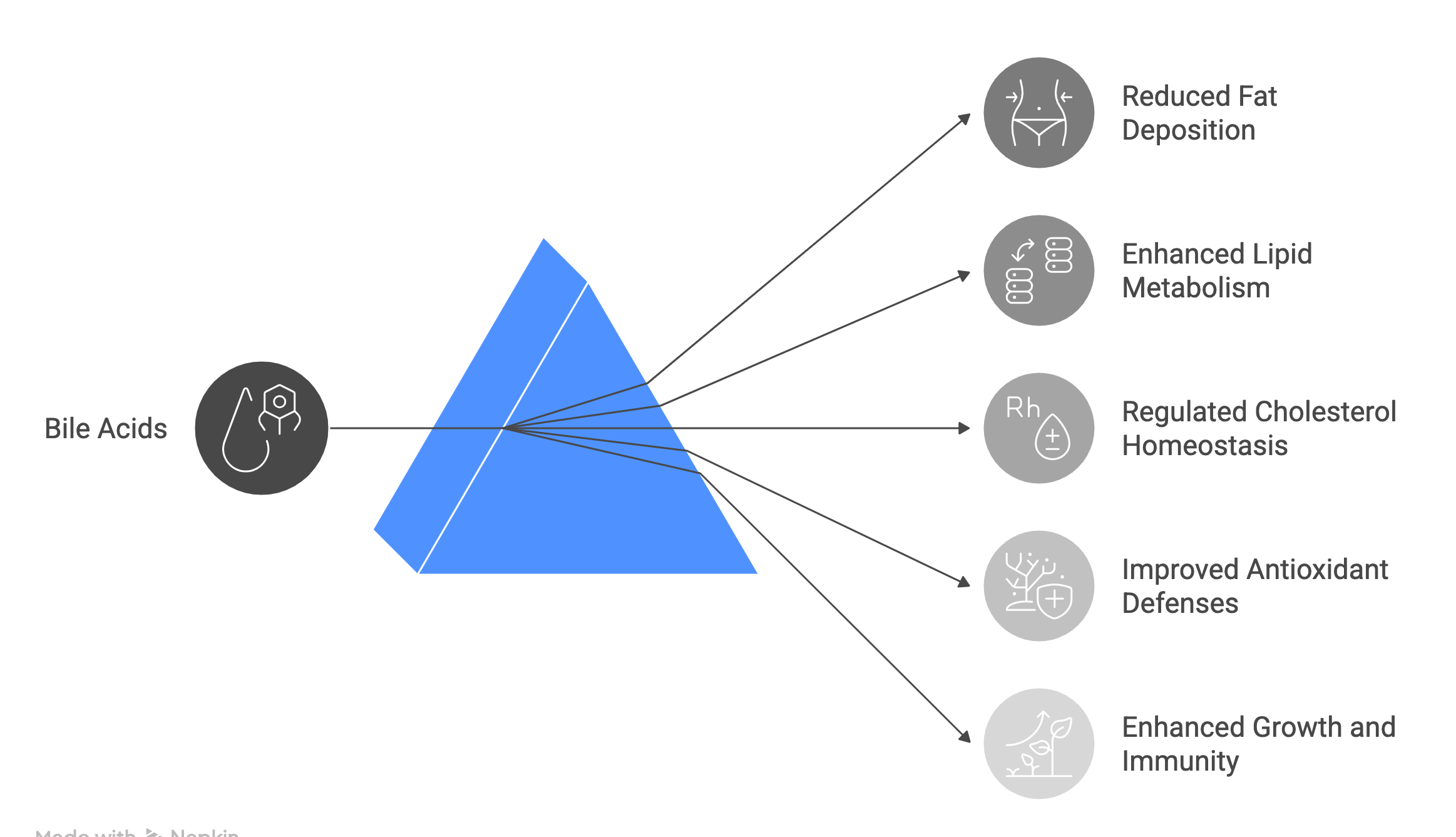
In summary, the addition of bile acids to high-plant-protein shrimp feed is not merely a simple nutritional supplement but a comprehensive solution addressing the special physiological bottlenecks of shrimp and the inherent deficiencies of plant-based raw materials. It functions through four critical pathways: compensating for physiological deficiencies, counteracting anti-nutritional factors, improving energy utilization, and protecting core organs. This makes bile acids indispensable for achieving healthy and efficient shrimp farming under low-fishmeal or fishmeal-free feed conditions. Therefore, bile acids should be regarded as an essential core functional additive in high-plant-protein shrimp feed formulations.
Reference: